Beverage partner? Enroll a new account here →
Menu planning
Standard restaurant menu sizes, in inches and cm
Most restaurant menus in the US are printed on letter paper, 8.5 × 11 inches (21.6 × 27.9 cm). Longer menus use legal (8.5 × 14 in) or an 11 × 17 in sheet folded to letter size. Drink and dessert menus often go narrow, at 4.25 × 11 in. Outside the US, the standard is A4 (21 × 29.7 cm). Every size is below, in inches and centimeters.

Our demo menu
A print menu made in Just a Menu from our demo restaurant’s menu.
Standard menu sizes chart
Letter is the everyday menu size in the US and Canada. A4 is the everyday size almost everywhere else. The rest are the usual sizes for long menus, drink lists and small cards.
In millimeters: letter is 216 × 279, legal 216 × 356, tabloid 279 × 432, half letter 140 × 216 and the tall 4.25 × 11 in size 108 × 279. A3 is 297 × 420, A4 210 × 297, A5 148 × 210 and DL 99 × 210 mm, a third of an A4 sheet.
Which size for which menu
No rule sets a menu size. These are the sizes most restaurants and print shops use for each job.
Menu
Common sizes
Dinner menu
Letter, 8.5 × 11 in (A4 outside the US). For a long menu, legal (8.5 × 14 in), or an 11 × 17 in sheet folded to four letter-size pages.
Lunch, café or takeout menu
Letter, flat or as a tri-fold that closes to about 3.7 × 8.5 in. An A4 tri-fold closes to DL, 9.9 × 21 cm.
Bar and cocktail menu
Narrow and light: 4.25 × 11 in, or half letter at 5.5 × 8.5 in (A5 outside the US). A full beer, wine and cocktail list moves up to letter or legal.
Dessert and drink cards
4 × 9 in (the standard rack card size), 5 × 7 in or half letter. DL or A5 outside the US.
Kids’ menu
Half letter or letter, often printed as a coloring sheet. 11 × 17 in if it doubles as a placemat.
Table tents
4 × 6 in or 5 × 7 in per side, folded. These are the two most common sizes, and most holders fit one of them.
Using menu covers? They’re sold by the insert size they hold, like 8.5 × 11 or 4.25 × 11 in, so order by that, not the outside size.
Folded menus: bi-fold and tri-fold sizes
A fold gives you more pages without a bigger menu on the table. Here’s the flat sheet you print and the size it folds to.
The tabloid bi-fold is the classic dinner menu. One 11 × 17 in sheet folds into four letter-size pages: a cover, two inside pages and a back.
A tri-fold isn’t three equal panels. The panel that folds inside is a little narrower, so it tucks in flat. Ask your print shop for its fold template, and keep text away from the folds.
How many items fit on each size
These are rough planning numbers at 11 pt type, with a few category headings and comfortable spacing. Photos, long descriptions and big headings cut them down.
Out of room? Don’t shrink the type below 10 pt. Go up a size, add a fold, or move drinks and desserts to their own card. For comparison, one wide TV menu board fits roughly 20 to 30 items at a size guests can read from the line.
Font sizes for a printed menu
A printed menu is read at arm’s length, often in low light. These are typical sizes:
Item descriptions · the body text
10–12 pt
Item names and prices
12–14 pt
Category headings · Starters, Mains, Drinks
16–24 pt
Restaurant name
24 pt+
Fine print · an allergen key, a tax note. The smallest you go.
8–9 pt
Dim dining room? Go up a point or two. Fonts vary, too: a condensed or script font at 11 pt reads smaller than a plain one. Before a big print run, print one page at 100% and read it at your darkest table.
Margins, bleed and photos for the printer
Print shops print on a bigger sheet and trim it down, and the cut can drift a little. Bleed and a safe margin keep that from showing.
Bleed
Run background colors and photos 0.125 in (3 mm) past the edge on every side. A letter menu with bleed is 8.75 × 11.25 in. A4 is 216 × 303 mm.
Safe margin
Keep text and logos at least 0.125 in (3 mm) inside the edge. About 0.25 in (6 mm) looks better.
Office printer
Many can’t print to the very edge. Leave a white border of about 0.25 in, or use a print shop for edge-to-edge color.
Photos
About 300 pixels per inch at the printed size. A full-page letter photo is 2550 × 3300 pixels; a 3 × 2 in dish photo is 900 × 600.
File
Send a PDF. It keeps your fonts and layout exactly as you set them.
Ask first
Every shop has its own specs. Ask for its bleed, margin and fold template before you lay out the menu.
Paper weight, in plain terms
Heavier paper feels better and lasts longer. US weights are confusing: 80 lb cover is much thicker than 80 lb text. Grams per square meter (gsm) is simpler: the bigger the number, the thicker the paper.
Menus guests handle all day last longer laminated or in a menu cover. Printing in-house on card stock? Check the heaviest paper your printer can feed first.
TV menu sizes
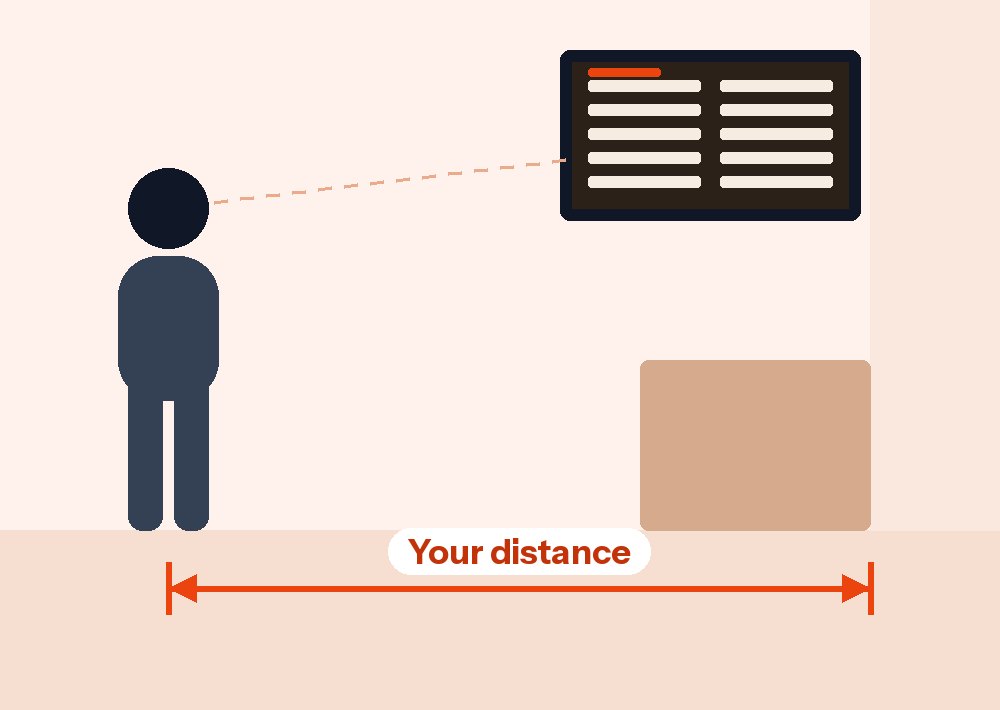
A menu board on a TV isn’t sized like paper. It’s designed in pixels: 1920 × 1080 per screen, or 1080 × 1920 when the TV hangs tall. Most counters, where guests read from 6 to 10 feet, use a 50–55″ TV for each screen.
These are the picture area of a 16:9 TV. The TV itself is a little bigger, so check its spec sheet before you measure the wall.
Text works differently, too. A printed menu reads well at 10–12 pt, but a board read from 10 feet away needs capital letters about 1 inch tall. For TV size by distance and text size in pixels, see the menu board size guide. Planning a board on paper first? Our free menu board templates are 1920 × 1080 per screen, as PNG and PDF.
Print every size from one menu
With Just a Menu, your print menus come from the same menu that runs your TV menu boards and your QR menu. Your items, prices and descriptions are already in the design, so there’s nothing to retype.
- Choose Paper Size. Letter (8.5 × 11 in), legal (8.5 × 14 in), tabloid (11 × 17 in), A4 (8.27 × 11.69 in), a letter-size trifold with fold guides, or a custom width and height.
- Pick a design. Or start from a blank page. Your menu fills in either way.
- Download PDF. A print-ready file, yours to keep. Print it in-house or at any print shop.
- ✓Make it yours. Every print design opens in JAM Canvas, our full editor, to change colors, photos, fonts and layout. Your items stay connected.
- ✓Change a price once. Your TV boards and QR menu update by themselves, and the next PDF has the new price. Menus you’ve already printed need a reprint, when it suits you.
- ✓Add your QR code. Put it on the printed menu so guests can check today’s prices and specials between print runs.
- ✓No typed menu yet? Snap a photo of your paper menu. Just a Menu reads every category, item and price, and you check it all before anything goes live. Menu from a photo
See the sizes and designs: Print menus and social posts
Questions
What is the standard size of a restaurant menu?
In the US, letter: 8.5 × 11 inches (21.6 × 27.9 cm). Longer menus use legal (8.5 × 14 in) or an 11 × 17 in sheet folded to letter size. Outside the US, the standard is A4: 21 × 29.7 cm (210 × 297 mm).
What size is a menu in cm?
A letter menu is 21.6 × 27.9 cm, legal is 21.6 × 35.6 cm and an 11 × 17 in menu is 27.9 × 43.2 cm. A4 is 21 × 29.7 cm, A5 is 14.8 × 21 cm, A3 is 29.7 × 42 cm and DL is 9.9 × 21 cm.
What size should a bar menu be?
Most bar and cocktail menus are narrow: 4.25 × 11 in (10.8 × 27.9 cm) or half letter, 5.5 × 8.5 in (14 × 21.6 cm). Outside the US, A5 or DL. A long beer, wine and cocktail list fits better on letter, legal or a bi-fold. For the wall behind the bar, see bar menu boards.
What is a good small menu size?
Half letter (5.5 × 8.5 in) or A5 (14.8 × 21 cm) for a short menu. For drink and dessert cards, 4 × 9 in or DL (9.9 × 21 cm). Table tents are usually 4 × 6 in or 5 × 7 in per side.
What are the dimensions of a tri-fold menu?
A letter tri-fold is printed on an 8.5 × 11 in sheet and folds to about 3.7 × 8.5 in. A legal tri-fold folds to about 4.7 × 8.5 in. An A4 tri-fold folds to DL, 9.9 × 21 cm.
What font size should a printed menu use?
Typically 10–12 pt for descriptions, 12–14 pt for item names and prices, and 16–24 pt for category headings. Go a point or two bigger if your dining room is dim.
What size should a TV menu be?
A TV menu is designed at 1920 × 1080 pixels for each screen. Most counters, where guests read from 6 to 10 feet, use a 50–55″ TV for each screen. The menu board size guide covers every distance.
Can Just a Menu make print menus in these sizes?
Yes. Choose letter, legal, tabloid, A4, a letter-size trifold with fold guides, or your own custom size, and download a print-ready PDF. You print it in-house or at any print shop.
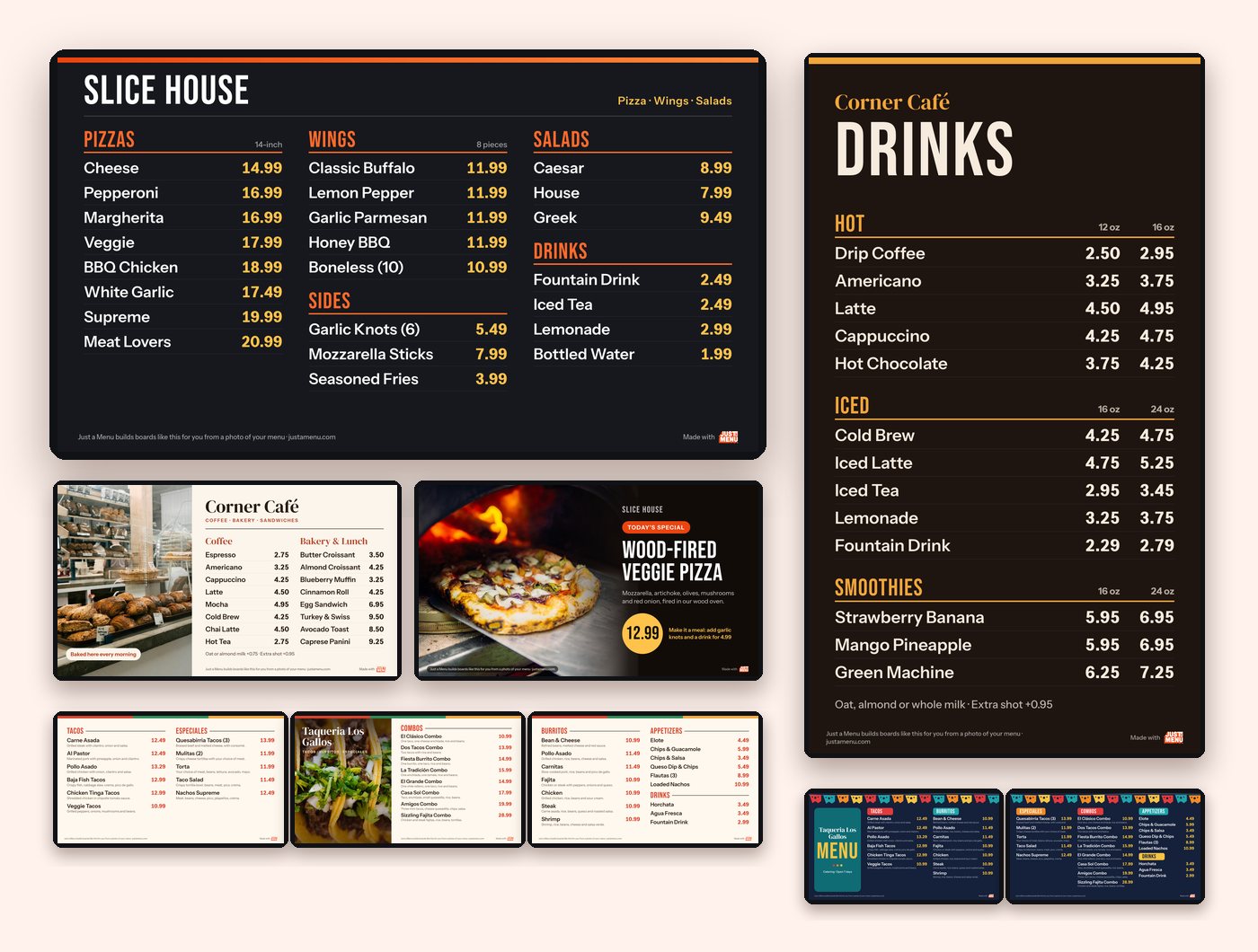
Sample templates
Free menu board templates
Six layouts at 1920×1080 per screen, as PNG and PDF.
Get the templates →
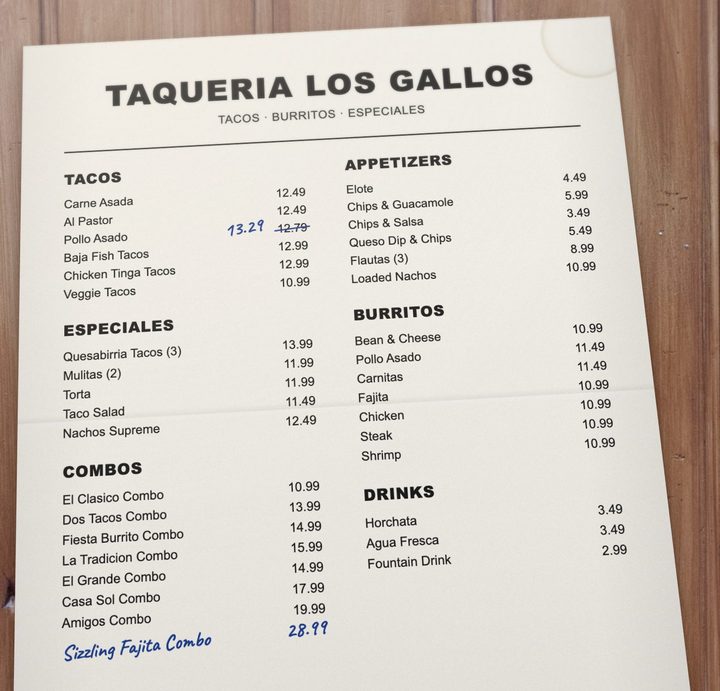
Menu from a photo
Snap the paper menu you have. Every category, item and price comes in, with no typing.
See how it works →
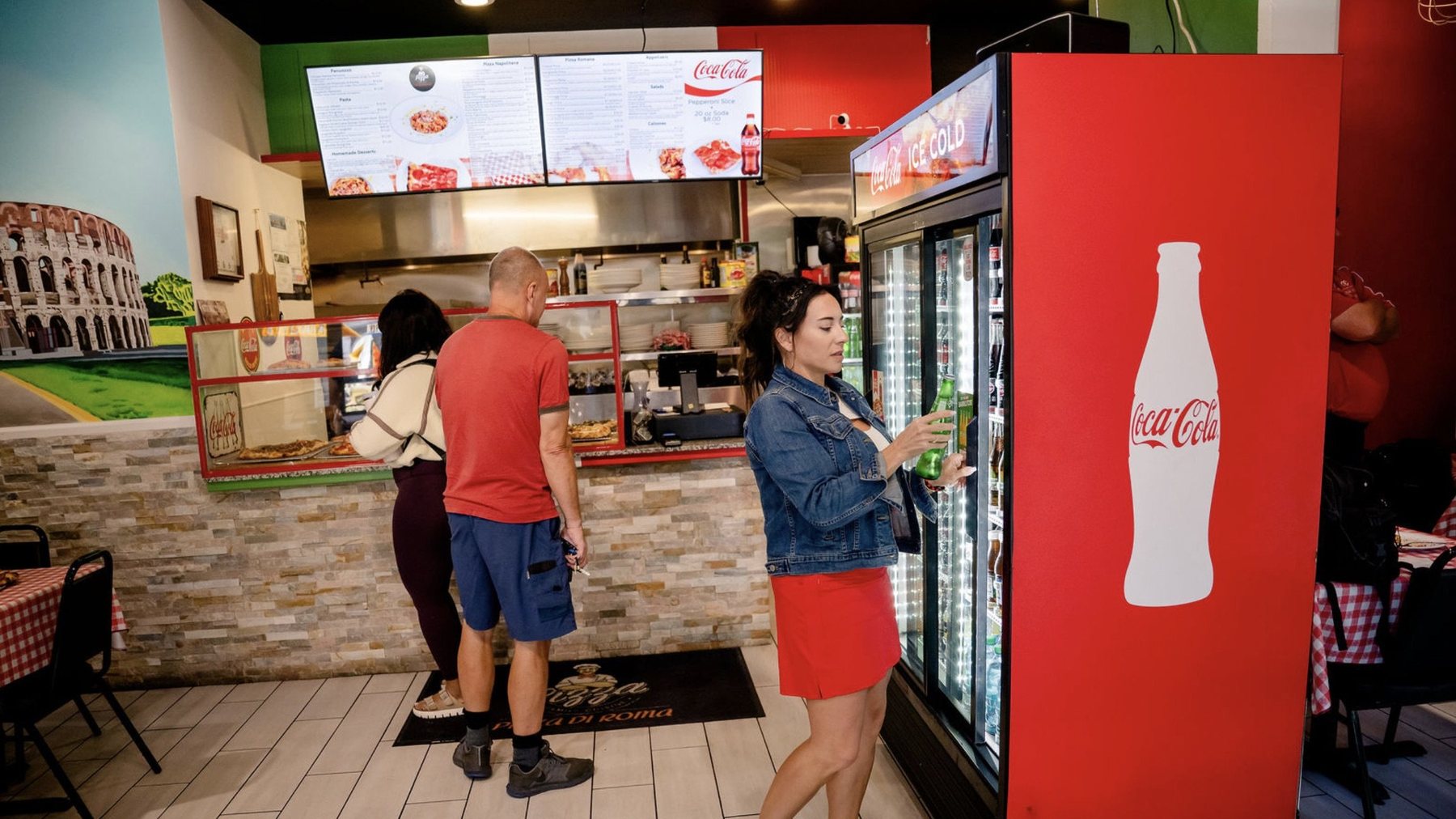
Pizza Di Roma · Austin, TX
Design a board people can read
Text size, how much fits, and where photos earn their place.
Read the design guide →
Got the size? Let’s talk about the menu.
Once you’re set up, a photo of your menu becomes your menu boards, your QR menu and print-ready PDFs at your paper size.
Talk to a real person. We reply within one business day.
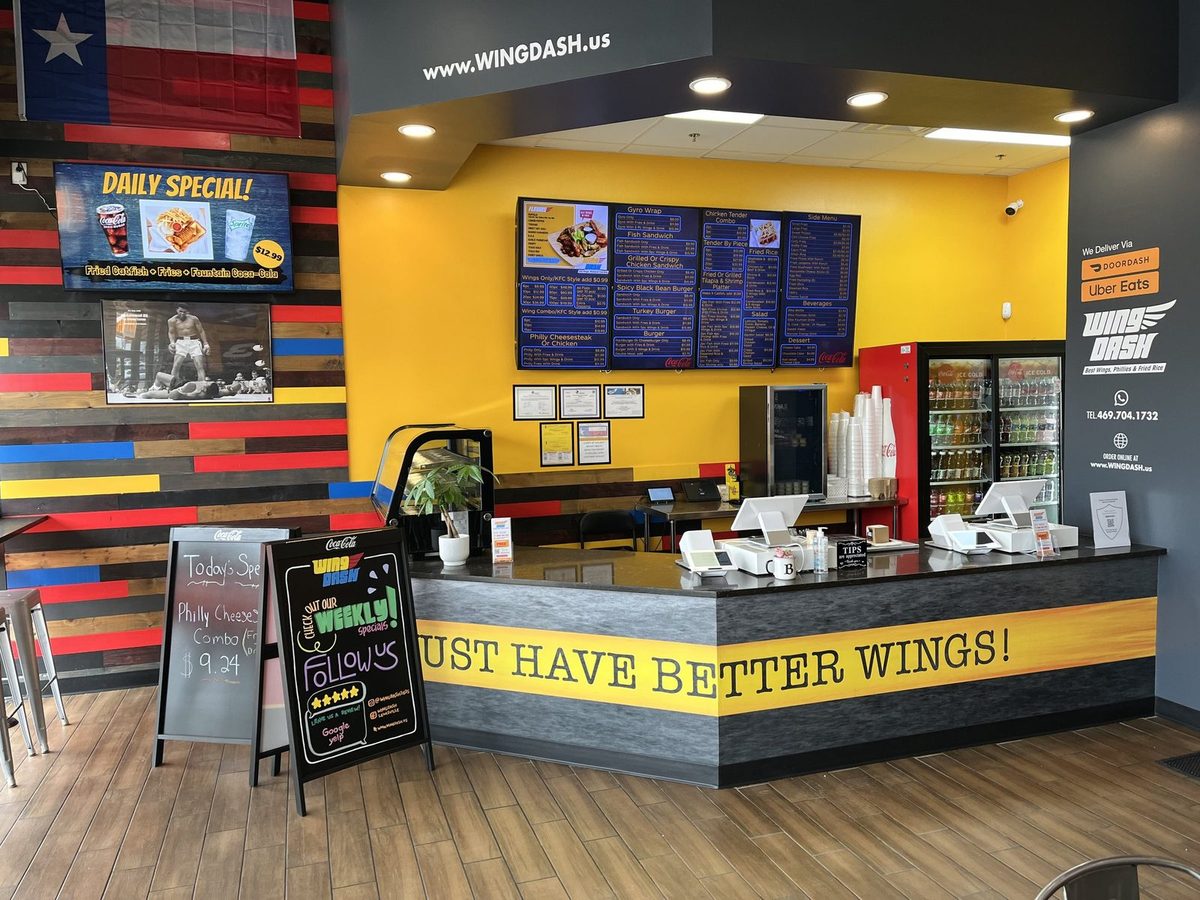
Wing Dash · Dallas, TX
Questions about printing your menu? Email support@justamenu.com or call (202) 886-2442.